Friedrich Hayek was not a great formal economist, but he has been hugely influential politically and in the evolution of modern microeconomics, perhaps in spite of himself, argues Philip Mirowski, a historian and philosopher of economic thought. He talks us through books to better understand the Austrian émigré who ended up in the United States as the great convener of neo-liberalism in the mid-20th century and whose ideas are still influential in the new populism.
Could you start by telling us a bit about why we need to study Hayek and understand his contributions?
Friedrich Hayek was one of the deeper thinkers on the right in the 20th century. Arguably, he’s less famous than Milton Friedman, or William F Buckley, or even Ludwig Mises, and that’s unfortunate, because they are much more superficial than Hayek in terms of seeing what the problems of the right are.
Hayek also doesn’t get enough credit for being something of an organizational genius. Who would have thought this Austrian, who initially emigrated to Britain—where he didn’t seem to fit in the culture very well, even though he loved the Brits—would turn out to be so important in organizing so much of the transnational intellectual firepower of the right in the 20th century?
Thirdly, even though Hayek is not super well known among modern economists, he has turned out to be very important for the evolution of modern microeconomics. Again, who would have expected that, given that, in my opinion and that of plenty of others, he really was a mediocre formal theorist as such? His big theory book, The Pure Theory of Capital, really doesn’t make much sense and is a bit of a waste of time.
Hayek moved away from what is considered to be formal economic theory, especially after he moved to the United States. Paradoxically, that’s what made him intellectually important. It was a strange set of circumstances, which probably holds some lessons for us about intellectual history, too. The kind of things that people are often explicitly known for are not really the things that they end up being important for in the larger ecology of intellectual life. That’s fascinating—even though I think ultimately his trademark contributions were wrong.
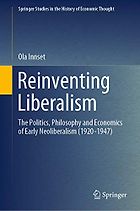
Let’s find out more as we go through the books you’re recommending. First up is Reinventing Liberalism by Ola Innset.
The reason this book is important is because it is a meditation upon the issue of how classical liberalism was deeply unstable and also got its comeuppance in the period that saw the rise of the Nazis and the aftermath of World War Two.
There are many people who consider themselves to be followers of Hayek who also claim to be classical liberals in the tradition of Adam Smith. That combination turns out to be misleading and wrong because classical liberalism was in deep trouble. It’s really important to understand the reasons for that if we’re going to understand why Hayek became significant. Innset is great on all that. He’s wonderful at parsing the inherent contradictions of the neoliberal response to the crisis of liberalism by focusing his book on the first meeting of the Mont Pelerin Society.
You might imagine that, as a history of neoliberalism, this narrow focus is a bit boring, that it’s an unfortunate way to go about exploring intellectual history. But actually, it turns out to be a great entry point, because all of the issues that are involved in the formation of neoliberalism emerge with great clarity when you look at what went on at that meeting in 1947. That’s what Innset accomplishes.
Among the issues he touches upon is the fact that the Mont Pelerin Society started out as Hayek’s baby. This political landmark wouldn’t have happened without Hayek’s subtlety in bringing these people together who actually didn’t agree on very much, and then getting them to consider working on a united project. A second thing Innset highlights are the close ties some of the founding members had to fascism, although Hayek always denied he had any such sympathies.
Innset also highlights the instability of Hayek’s position where, on the one hand, he’s attacking economic planning, because economic planning is just going to lead to everything that’s awful, like the Nazis and the Soviet Union. On the other hand, he argues that laissez faire, classical liberalism has failed. He states this latter thesis over and over and over again, so it’s important to take it seriously. The question becomes whether Hayek’s proposal is some kind of ‘third way’ story and, if so, what kind of third way.
What Innset brings out in his discussion is that no one in 1947 had any idea what this third way was. It’s not even clear, I think, to Hayek. It’s a very fascinating way to unpack the beginning of this project. There’s no manifesto of seven points to bring about the dawn of a new world—it’s not like that at all. Innset points out that this instability is not sufficiently stressed in much of the Hayek literature, but it’s brought right up front in his book.
Hayek became famous for preaching the slippery slope to totalitarianism in his Road to Serfdom, which is just one side of this political problem and doesn’t really have a clear focus and analysis. Innset captures what this project started out as, which is an expression of despair, but really not very much of a plan at all. How to plan for the downfall of planning? But it’s amazing the extent to which he can organize people around it and get them to talk to each other. How can Hayek pull off this balancing act, which on its face doesn’t really seem to be very plausible?
If I have a criticism of this particular book, it’s that Innset plays down the importance of epistemology in all of this—the theory of how we come to know things. A lot of the Mont Pelerin Society’s initial efforts to feel their way towards what they’re eventually going to promote is about understanding what the market is and what it does. It’s there in this book, but there’s not enough discussion of it.
What came out of that first Mont Pelerin meeting? Were there then regular meetings?
Yes, MPS became an annual event. It was not trivial to get a lot of these people together and get them to rehash things year after year. Also, even though it’s got a heavy economics component, Hayek had a light touch and was constantly bringing in people outside of economics to add to the mix. Economics became inward-looking in its postwar manifestation, with high walls and a strong sense of ‘us’ and ‘them’. Hayek also has his own sense of ‘us’ and ‘them’. His ‘them’ is the people who try to make excuses for socialism, but it’s much harder to know who the ‘us’ is, or credit their ideas as politically feasible.
What eventually comes out of these meetings is a conviction that democratic politics is dangerous, and that the neoliberals must take over the government to produce the sort of market-friendly society that will permanently relinquish socialism to the trash heap of history.
Let’s move on to Bruce Caldwell’s and Hansjoerg Klausinger’s biography of Hayek, Hayek: A Life, 1899-1950.
Everyone admits that this is the best biography of Hayek. There are others, but they are pretty miserable. This one really does present a whole lot of the detailed biographical data that one would want in a comprehensive portrait. It’s well cited, well documented, and so on.
The flip side, from my point of view, is that this is old-fashioned history of economics, where what you do is focus above all else on your hero. This is a heroic tale of thought thinking itself more than anything else. And the hero, because you’re focusing so intently on him, is relatively isolated, even in the intellectual portrait that’s being created. He seems to be self-creating his own genius.
Personally, I don’t believe that is a good way to write intellectual history, but the hero-biography is a very popular genre. Bruce presents Hayek’s reasoning as almost completely flawless and eminently judicious throughout, which is a little hard to take. Everyone else turns out to be just bit players. Mises gets a look in, but everyone else is just aghast at Hayek’s brilliance. And the surrounding history—and there’s a lot going on in the 20th century—is treated as local colour.
What’s good about it?
The book does stress how epistemology ends up being central to everything Hayek does, and I think that’s a very important insight. There is this question of how we come to know the social world, and what that implies for how we theorize it. That really is central to understanding Hayek, and the book is good on that. He admits that Hayek’s early economic theory is a little bit incoherent, but because Hayek is his hero, he can’t really belittle it too much.
The book argues that Hayek’s work on money and on capital theory got him hired at the LSE in the 1930s, which is amazing to me because that’s his most forgettable work. If that’s all he had done, he would have been relegated to the ranks of the undistinguished, and no one would remember him today. The truth is he was promoted because of his politics. Lionel Robbins at the LSE really wanted somebody to oppose Keynes and neutralize the insurgent left. Robbins actually spoke German, and he paid attention to what was going on in the continent. He hoped that Hayek could be a counterweight to Anglo trends in political economy.
The book is good on Hayek’s relationship to Keynes, which was reasonably friendly. But Keynes just trounced him in terms of intellectual significance, at least while he was alive. Keynes ran rings around Hayek. Caldwell goes some way to admitting that, which is, of course, somewhat hard for him to do because Hayek is his hero. But the truth is that Hayek didn’t accomplish what Robbins wanted when he brought him to Britain.
The book also begins to explain why Hayek was so afraid of scientism—that is, the inappropriate use of science in discussing economic and social questions. The early Hayek believed that natural scientists and engineers were the fifth column when it came to the onward march of socialism. I actually think that conviction is even more important than Caldwell makes it out to be, but Caldwell realizes that this is absolutely key to Hayek’s epistemology.
There are plenty of good things in the book, but it is tempered by the fact that Caldwell can’t explain the internal contradiction of his own position, which is that he portrays a Hayek who eventually ended up pronouncing that human reason was weak and unreliable and not the main cause of human flourishing. And yet Hayek, in the book, emerges as this eminently reasonable middle-of-the-road kind of guy who never goes over the edge in his politics and never plays footsie with the Nazis in any respect. He is a political operator who disparages the ambitions of politics. Here’s a guy who denounces the idea that reason is central to human endeavour, and yet Caldwell constantly paints him as the most reasonable, judicious and thoughtful individual. That’s a real tension that runs through the book, and it’s a circle that can’t be squared.
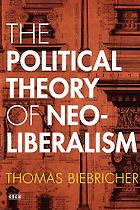
Let’s move on to The Political Theory of Neoliberalism by Thomas Biebricher.
This book is not simply about Hayek. It’s about the neoliberals as a group. Neoliberalism can’t be understood as springing fully formed from the brow of Friedrich Hayek, but rather is the result of interactions that happen among this assortment of people that he brings together to try to hash out all of these contradictions that these people on the right are trying to live through.
Biebricher is good for that because he’s European. He really knows the other groups that were important in Mont Pelerin, like the German Ordoliberals, the Geneva School, the Chicago School, and the French internationalists. He knows how to talk about this as a political project that is not completely unified. It wasn’t simply that Hayek set the tone, and everyone else marched in lockstep.
Their problem was how to reconcile their desire for a strong state that intervenes regularly in the economy, while also claiming that everything has to be subordinate to the market, with the market in some sense the final arbiter of politics. It really doesn’t fit together very well. Biebricher is good on that inconsistency, and examines the way they talk a good game about wanting to limit the nation state and curtail its powers and so forth, but also seek to use the strong state to reform the economy, whatever that means. He constantly comes back to the point that some have principled answers to this apparent contradiction, but that they’re not the same answers.
Biebricher has a couple of good observations on Hayek, as well. For Hayek, the idea of sovereignty is a metaphysical concept. He actually doesn’t think sovereignty is a real thing, which is unusual in a political theorist. He’s definitely not a democrat. Biebricher hammers that particular point home time and time again. Hayek has to play footsie with democracy, in some sense, but also wants to blame democracy for many of society’s ills. He also notes that there are a fair number of close parallels between Hayek and Carl Schmitt, who has a bad reputation as the ‘crown jurist of the Nazis’—a phrase from Hayek. But a lot of Carl Schmitt sounds like mid-career Hayek.
The book doesn’t play up the American followers of Mont Pelerin quite as much as perhaps one might like. Having said that, in the English literature, there’s not as much about the Germans and the French, so that’s why this book is important, because it does cover them fairly well.
Another complaint I have about the book is that there’s nothing at all about the group that formed around Murray Rothbard, then known as the ‘paleo-conservatives.’ One reason the right looks like it does today has to do with this breakaway group from within the neoliberals, around Murray Rothbard and the Mises Institute, and they smell a lot like Trumpism. Given it’s a book about politics, you might want it to talk about modern politics a little bit more.
You mentioned that Hayek is not a democrat. If he didn’t think power rested with the people, where did he think authority lay, or should lie, within the state?
That’s what I meant by sovereignty being metaphysical. It’s as if he’s constantly denying that there is actual political authority, or that law is the product of intentional activity. Humans can’t be trusted to control their own destiny. This may seem strange to you, but it’s why, in the second half of his life, he goes absolutely all in for evolution.
Evolution is the magic wand that serves to reconcile all that for Hayek. Evolution becomes his trademark way of trying to escape this central problem in his own political thought, of wanting to have a right-wing programme to occupy the state, but not really treating the state as though it’s this ongoing, powerful, unique entity that requires a coup. It’s a really curious position.
Within the Mont Pelerin Society, there were many different and clashing views on what the state is. Some of them really do believe in the state as being an absolutely coherent entity, intellectually motivated in some way. Hayek doesn’t really believe such a thing. He’ll pay lip service to the idea that it’s got to be a democracy, but then amend it with the principle that you can’t really let the people determine very much. What kind of democracy is that? Is it just to placate and bamboozle the proles?
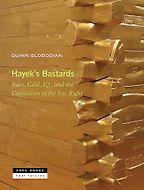
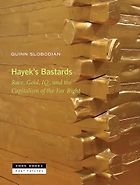
Let’s turn to Hayek’s Bastards by Quinn Slobodian.
Since the 2010s, a lot of people have said that neoliberals were politically important from the 1980s onwards, but that more recently neoliberalism has been politically repudiated. They can point to all kinds of things—like the return of protectionist tariffs—to demonstrate this. Maybe neoliberalism doesn’t matter anymore—that’s become a very common position on the left. Slobodian challenges that—hence the designation ‘Hayek’s bastards.’ This book is very good in pointing out that many of the figures who have developed this more recent ‘populist’ right-wing strain of thought turn out to have been members of the neoliberal thought collective in good standing. That’s true of Germany as much as America. For instance, the people who started the Alternative für Deutschland (AfD) were all part of either Mont Pelerin or the Friedrich Hayek Society.
How is it that this stuff, which seems to contradict whatever people thought neoliberalism consisted of at the end of the 20th century, still has close genetic intellectual ties to it? It isn’t just because they’re right-wing in some vague political sense. It’s that, in some ways, the new populism grew out of the reactions to what had already happened amongst the subsequent generations of the neoliberal thought collective. Slobodian’s very good on this.
You would think that, after the Soviet Union fell, the Mont Pelerin folks would be dancing in the streets. But they weren’t. Slobodian documents how they immediately started worrying about what kinds of political units and states we were going to end up with in the wake of the Soviet collapse.
Would Donald Trump and Nigel Farage be two of Hayek’s bastards?
There’s probably a distinction between Slobodian and me here, in that he is willing to say that Trump himself really is almost a total break with the neoliberals. I am not so sure. The extent to which it’s a break or some sort of continuity depends on what you think is central to modern populism. For instance, the overt Trumpian hostility to expertise and the contempt for democratic safeguards is pretty Hayekian, as I see it.
Slobodian does take the position in this book that there are at least three significant reversals of what might be considered Hayek’s core propositions in this generation of Mont Pelerin figures. The way he argues it is through examination of what he calls the three ‘hards.’
The first is the tendency to appeal to ‘hard’ science in order to justify a resurgent racism and to underline the impossibility of maintaining any modicum of economic equality.
The second is to promote and reinforce their politics of ‘hard’ borders, which means exclusionary migration policies and an unapologetic muscular nationalism. Slobodian contrasts this with a tendency towards having more open borders in earlier neoliberalism.
Then, third, there’s ‘hard’ currency, this idea that somehow you can escape fiat currency in favor of gold or newer cryptocurrencies. This last divergence may have been less pronounced, since one can observe some longing for a natural money in Hayek as well.
So Slobodian sees these tendencies as the three central tenets of the more modern right, and he speculates about the degree to which these modern positions are reactions to contradictions in Hayek’s thought.
A central figure in the ‘populist turn’ amongst the neoliberals was Murray Rothbard. Rothbard was very central in the neoliberal thought collective. He helped found the Cato Institute. He was a member of the Mont Pelerin Society. But then he started breaking away by saying that Hayek was mistakenly worried that working people would all be attracted to socialism for all sorts of bad political reasons. Rothbard’s position in the 1990s was that, if you look around, working people aren’t pro-socialist anymore. The real enemy is the professional intelligentsia.
Intellectuals were the enemy for Hayek too, but the Rothbard change in political strategy grew much closer to fascism. Rothbard asked how we can use the relatively disgruntled, ignorant working populace against the intellectuals and take over the state in that way. He turned out to be important for many of the people who built the AfD, and Slobodian knows German politics fairly well. He also points out that the current president of Argentina, Javier Milei, was a member of these clubs at an early stage, became a follower of Rothbard, and developed this populism in Latin America. It’s interesting that you can trace many of these main populist lines from the neoliberal thought collective.
The issue is how that happens. Slobodian makes the case that Hayek’s bastards are still the ones who dominate much of right-wing politics, which means that Hayek still has this profound influence much further down the line. Remember, Hayek himself didn’t believe that you could trust people to be rational, so this populist irrationality that’s being developed on the right is really part of the Hayekian legacy.
One minor complaint about Slobodian is that he doesn’t really explore Hayek’s own internal contradictions to any great extent. He’s not as interested in unpacking the way in which Hayek’s own internal contradictions give rise to this new populism.
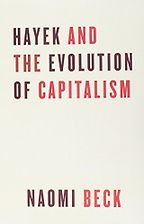
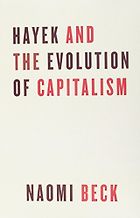
Your final book recommendation is Hayek and the Evolution of Capitalism by Naomi Beck.
There’s something that’s been missing so far in all these books that I’m identifying. It’s unfortunate, and it’s something that really jumps out at me. It’s that Hayek in the 1930s, and certainly by the 1940s, decided that the enemy with regard to theorizing society was the natural scientists. That’s why he wrote this strange book in that period, the Counter-Revolution of Science. Nobody reads this now, but I think it’s important. At first, he has this impression that neoclassical economics is wrong because it smells too much like mechanics.
I have some sympathy with this proposition, because my first book was about how neoclassical economics is really copying 19th-century physics. That explains a whole lot about why it employs the maths that it does and how it portrays people. That’s another reason why I enjoy reading Hayek, because in some ways, he and I start from a very similar position, in that we both think neoclassical economics is wrong.
But what Hayek then says is, ‘Well, we can pretend that it’s still okay to do that kind of economics, because once we understand what a market really is, we’ll understand that all that stuff about equilibrium is not very important.’ This is where he innovates the idea that the market is really an information processor: that it knows stuff that no individual can know and see on their own. That also explains his hostility to human rationality, because individual reason doesn’t matter very much, because we’re all stupid anyway, relative to the market. That’s why, for Hayek, we must submit to political deference to the market.
There’s a logic to this, because it’s the market that knows what’s going to happen and what the true consequences are, and we don’t. But then the issue is whether this situation has always been the case. He realizes that, no, obviously, there’s been social change going on, and we’ve developed beyond static tribalism. That’s why, from the 1940s onwards, he became more and more dependent on evolution to explain why society must become more deferential to the market over time. The curiosity here is that when he makes this move, he’s contradicting his own mid-century position, that the natural scientists are always the culprits. Now, instead, he’s going to want his own version of science to justify why we have to have the kind of politics that he advocates.
I think the really interesting point here is that he learned a lesson from his early-to-mid years, that you couldn’t blame all this favorability towards socialism on scientists. If you just keep insisting science is the problem, and rationality is a problem, you’re just not going to get anywhere as a political project. You have to have some kind of appeal to nature and the natural yourself. In the second half of his life, he constantly hammers on these appeals to evolution to explain why our politics must be deferential to the market.
It’s weird because does Darwinian evolution say anything like that? Mostly not. It’s true that there once was a version of social Darwinism, but this is a problem for him, too. He’s got to coquette with social Darwinism, but deny that he’s doing it. He wants a version of evolution that dictates that there’s only a certain kind of politics that’s going to be coherent with the market. We don’t really totally know what that is, but evolution is going to instruct us.
This is why the Beck book is so important. We really need to take apart this move that he’s making to solve his own sticky intellectual problem, which is to promote his relationship to nature and natural science in order to argue for a certain kind of politics. Beck goes into great detail about when he does this, why he does this, and how he struggles with his continued commitment to so-called methodological individualism.
For instance, Beck points out that he really isn’t an individualist. He has a mid-career attempt to describe something called true individualism and false individualism. True individualism is British, but it’s evolutionary, whereas false individualism is French and interventionist. Somehow, he wants to claim that society is not a bunch of isolated individuals as it is portrayed, for example, in neoclassical economics and so forth, but that society itself forms spontaneously. And in this spontaneous development, human reason and intention are not a major force.
This is the part that I don’t think gets stressed enough. You begin to see that this is his way to get around the idea that people need to make their own politics. He thinks that’s wrong; they just need to pledge their allegiance to the market. If they understood how evolution worked, they would simply go about their business and they wouldn’t try to remake society in some way. Beck’s very good on this, and all the ways in which his biology attempts to fit into his epistemology. At least in his version, people don’t need to think because somehow there’s this supra-personal force that’s guiding them towards progress. He equates economic success with progress, and by the way, he says that that’s what evolution selects for.
Beck points out that although he seems to be appealing to natural science, he’s really not, because Darwin never claimed that evolution always leads to success. If anything, it’s the opposite, much of the time. Hayek’s line is that evolution always leads to success. So we just have to be politically passive in the face of it.
This faith in markets as evolutionary computational or cybernetic entities actually starts getting more and more real as we get close to the present in the following sense: if you treat markets more like algorithms, then you know these algorithms can find wisdom that people can’t. That is the predominant nature of modern mathematical microeconomics.
Does this bring us to the book that you wrote with Edward Nik-Khan, The Knowledge We Have Lost in Information?
Yes, because it says that he has had an impact on formal economics too, in ways that I don’t think Hayek himself necessarily perceived. A lot of people who code automated trading systems or work in market design—which is the hot area among formal mathematical economists these days—are subscribing to a position not so wildly different from Hayek’s, that markets can find the truth and supersede politics.
This is why I think he’s way more intellectually important than those who sneeringly say that Hayek wasn’t a real economist. Ultimately, I think he changed the way our culture thinks about markets now. Of course, he’s not alone. I want to be clear about that. He simply happened to be writing simultaneously with the rise of the computer and the effects that’s had on our culture.
In that sense, he’s way more important than the economists who get remembered because they’re so formally perceptive, like, say, Ken Arrow or Gérard Debreu. Nobody gives a damn about general equilibrium anymore, honestly. It’s a story that caught on in World War Two. It doesn’t have legs. Hayek’s thought inadvertently has legs because on this very specific point, he’s influenced these areas of market design in contemporary microeconomics.
My book with Eddie is not entirely about Hayek. It’s about market design, mostly, and the effect of computers on economic theory. But we point out that almost all of these people end up bending a knee to a greater or lesser extent to Hayek. It behoves us to understand why that is. It isn’t just because they have right-wing politics, although lots of economists do.
The image of the market has been changed so dramatically that what it means to intervene in the economy has changed. Intervention in the market used to mean something like changing price incentives or extending government subsidies. That’s not what it means anymore. Now, we can actually change the algorithmic character of the market to produce outcomes never dreamt of in previous economic theories. And Hayek, even though he’s supposedly anti-interventionist, created the possibilities to imagine this kind of intervention.
Five Books aims to keep its book recommendations and interviews up to date. If you are the interviewee and would like to update your choice of books (or even just what you say about them) please email us at [email protected]
Five Books interviews are expensive to produce. If you've enjoyed this interview, please support us by donating a small amount.
Philip Mirowski
Philip Mirowski was appointed the Carl Koch Professor of Economics and the History and Philosophy of Science at the University of Notre Dame in 1990. He has been Professor Emeritus at Notre Dame since 2022.
Philip Mirowski was appointed the Carl Koch Professor of Economics and the History and Philosophy of Science at the University of Notre Dame in 1990. He has been Professor Emeritus at Notre Dame since 2022.